




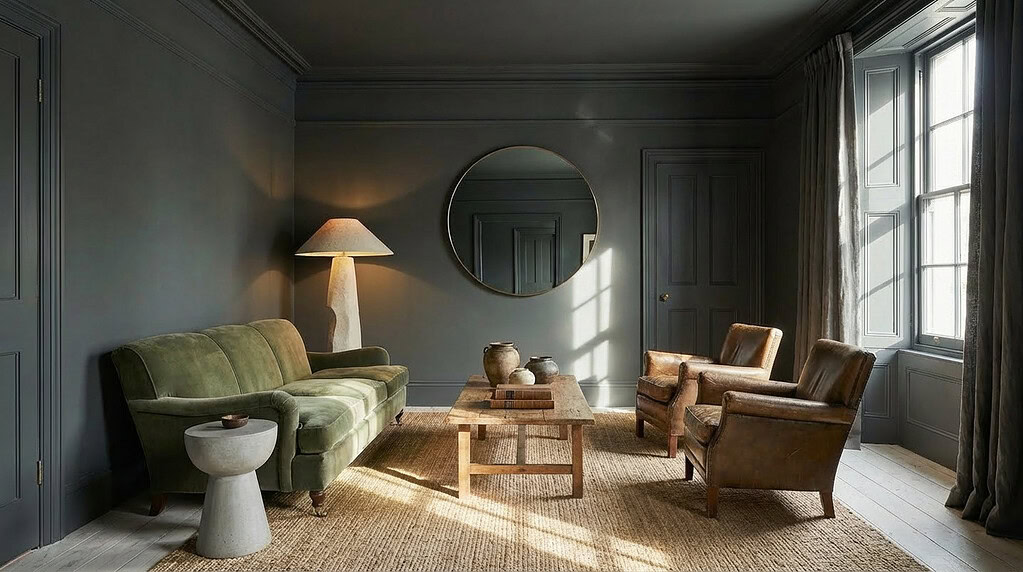
Paint is the quickest, easiest and most dramatic change you can make to any room.
Full stop.
Choosing the right shade of any color can make you wince and shrivel.
You have to compare different base pigments, choose from the thousands of variations, rummage through thousands of tiny bits of paper displaying tiny colors, and eye watering disclaimers that the color on the tiny bit of paper will most likely vary on your wall.
And that’s just for…
Color on the walls,
Blinding white on the ceiling,
Polite semi-gloss on the skirting.
It’s becoming harder than eye surgery and taking longer.
But are the results fabulous, pedestrian or meh?
Out of inconvenience and countless diversions comes a painting trend that is cropping up more and more.
Enter: Color Drenching.
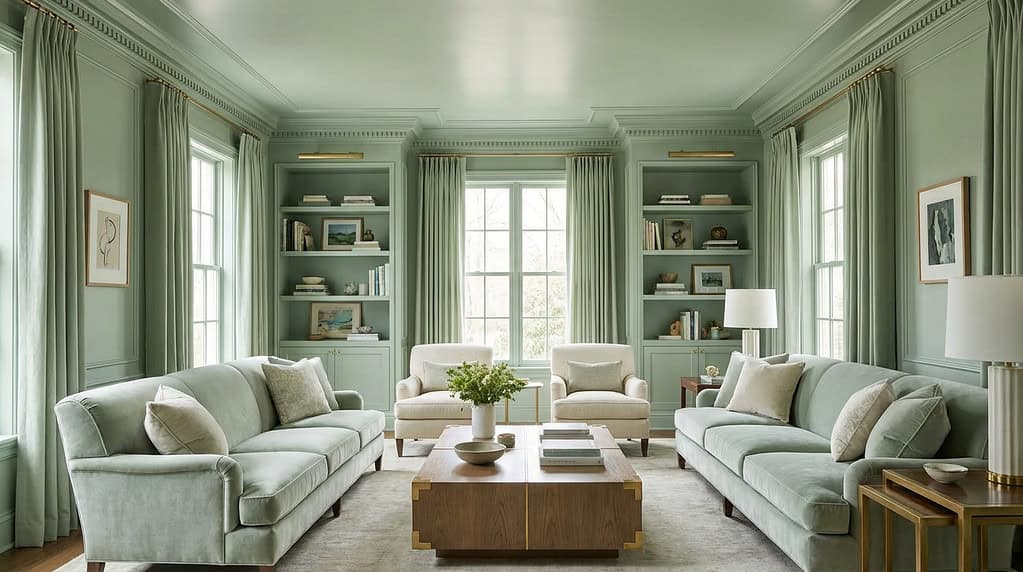
It’s bold.
It’s moody.
It’s the single easiest way to make your home look like a boutique hotel.
It creates a seamless, immersive world that feels expensive, intentional, and just a little bit dramatic.
And … it’s actually a dream hack for anyone who would prefer to be doing something else.
Does every designer love it? Of course not.
The anti-color drenching brigade is against it.
They feel that it’s too cozy, too dark at night and admittedly too cool.
So, they are against it. Are they right?
Of course not. We’ll talk about that later.
Ready to break some rules? Let’s dive in.
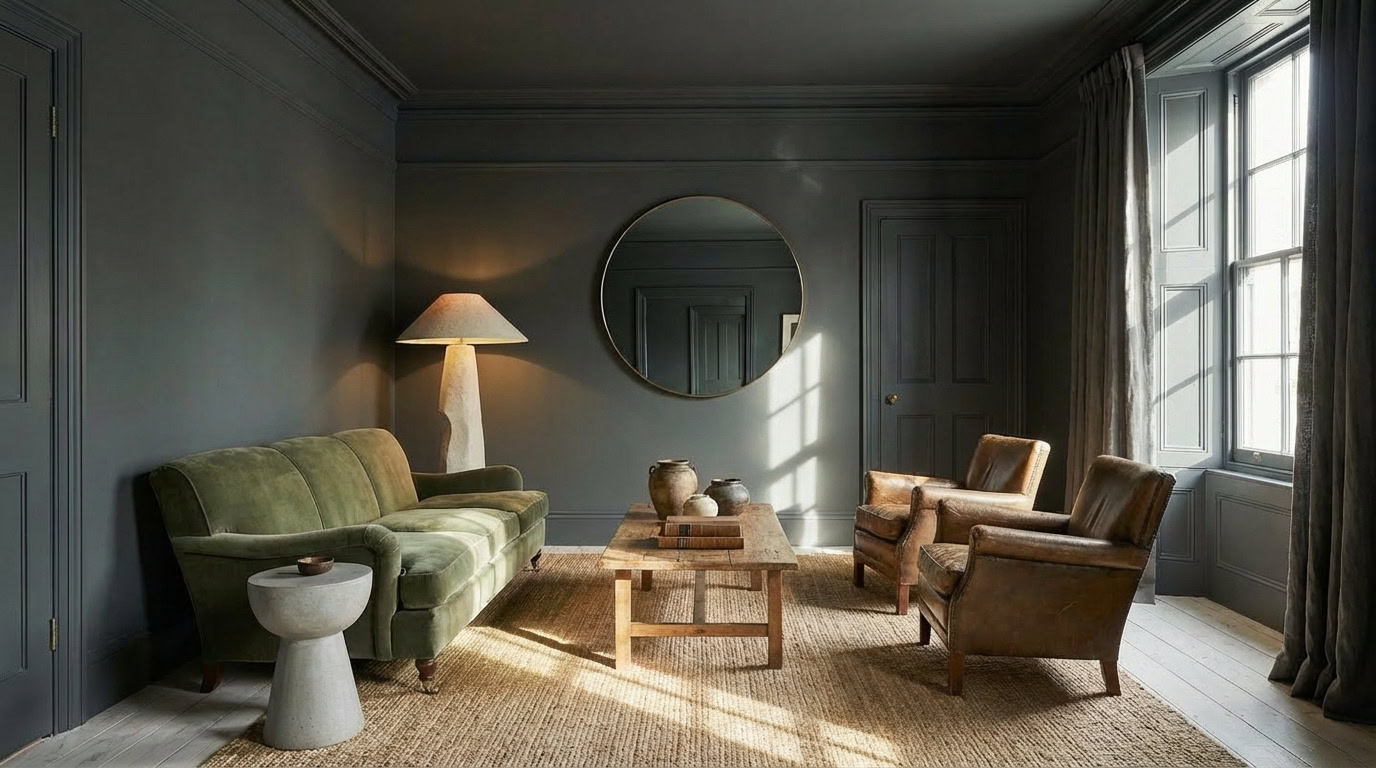
Color drenching is painting everything—walls, baseboards, crown molding, doors, and ceilings—in a single, unified color. While the result looks like is a high-end design choice from the pages of Architectural Digest, it’s actually one of the most practical, budget-friendly, efficient techniques to use in your home.
And here’s why you should consider it for your next room refresh.
What Color Drenching Actually Achieves
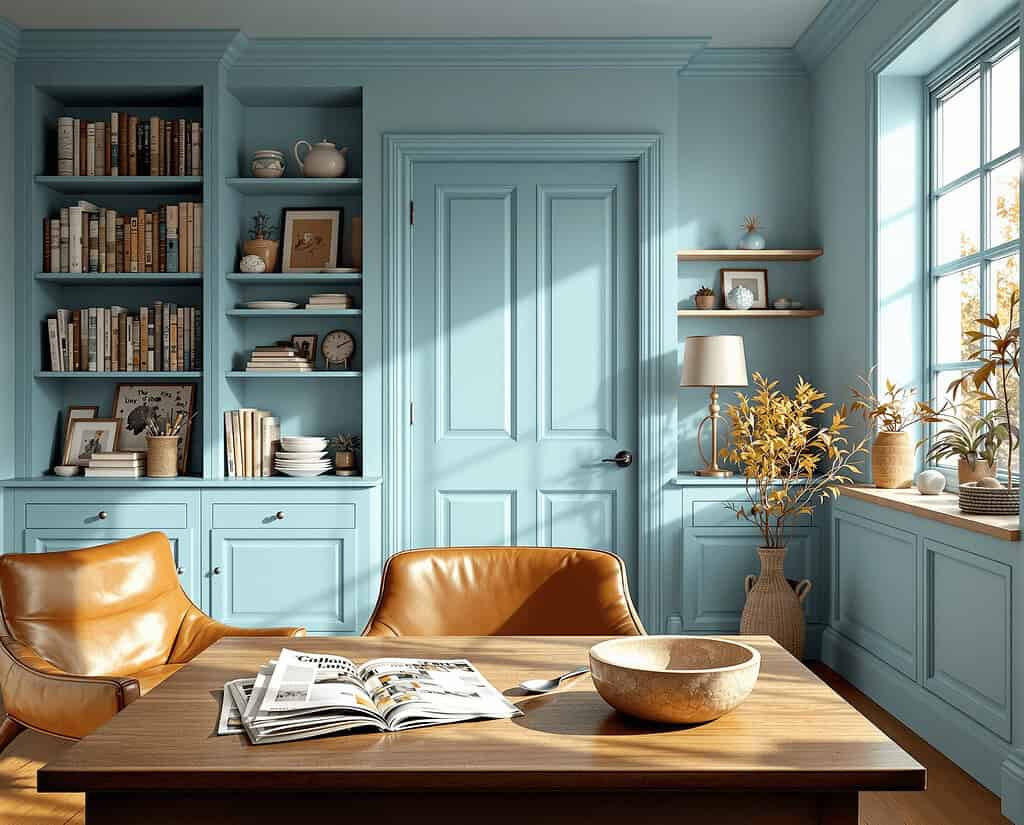
Designer’s Complaint: No, it’s not the name of the latest cool bar or club. Some designers feel that painting a whole room dark blue or terracotta would make it feel claustrophobic; when the opposite is usually true.
In fact, when you paint the ceiling and trim white, you are drawing a bright, sharp line that tells your eye exactly where the room ends. You are essentially outlining the box you are standing in.
Designer’s Lament: The second assumption is that all color drenching is done using dark paint colors. You can color drench a room in any light or dark color.
Back to what color drenching gives you –
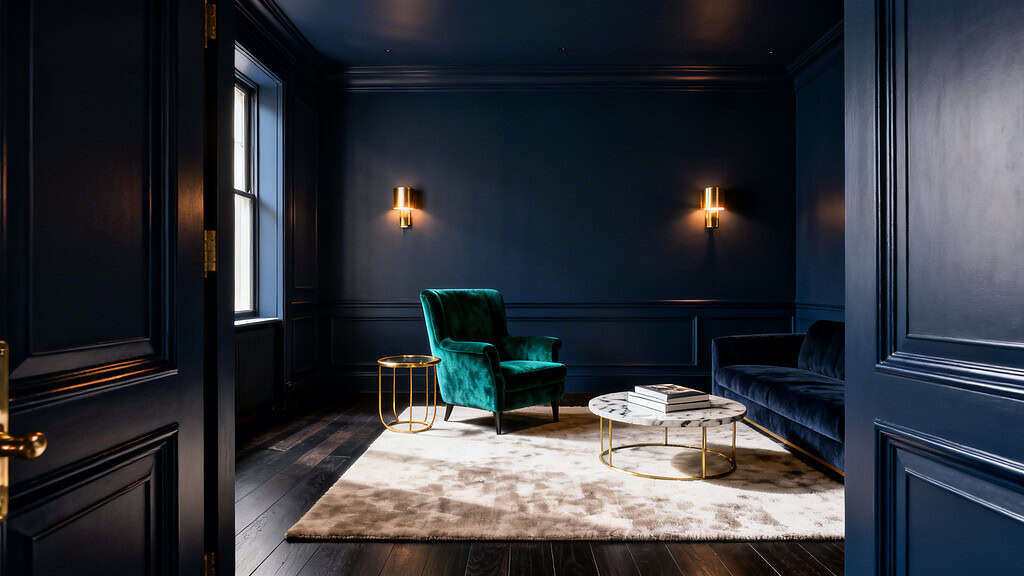
- The Illusion of Height: Without a contrasting ceiling line to stop the eye, walls feel taller and ceilings feel higher. You room becomes bigger, not smaller.
- Visual Calm: By reducing the contrast between the woodwork and the walls, you reduce distractions or visual “noise.” The room feels calmer and more cohesive, making it the perfect backdrop for art and furniture.
- Instant Drama: It turns a boring, boxy room into a jewel box. It feels intentional and architectural, even if the architecture is basic.
The Best Places to Color Drench
You can color drench a whole house, but it shines brightest in specific problem areas.
1. Small, Dark Rooms
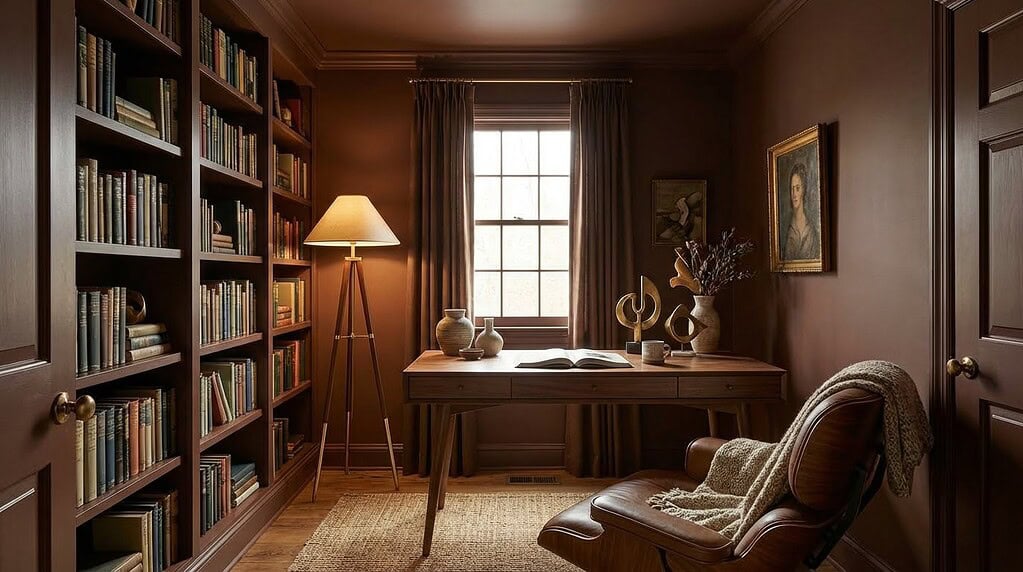
Stop fighting the lack of light in a powder room or small north-facing bedroom. Painting your dark rooms white will make them look dirty gray and shadowy. Until you find a way to get more natural light into those spaces you’ll need to invest in more lighting anyway, so lean into the coziness by drenching it in a deep green, navy, or charcoal.
It turns a cramped space into a cozy cocoon.
2. Spaces with Awkward Architecture
This is a wonderful remedy for rooms with uneven bulkheads, strange soffits, exposed pipes, or radiators that stick out like a bad facelift.
Color drench.
When you paint a radiator or a weird ceiling drop the same color as the wall, it effectively disappears. Camouflage is the color drencher’s best friend. If you can’t move it, hide it in plain site by blending it in, so it gets lost and no-one quite knows where it starts or finishes.
3. Rooms with Poor Quality Trim
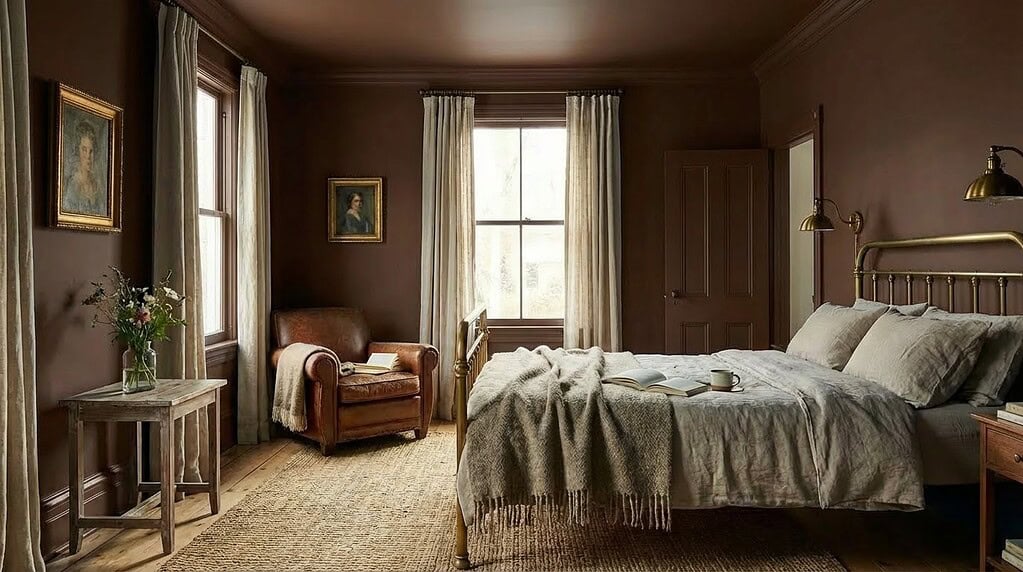
If your home has standard builder-grade baseboards that aren’t particularly pretty, highlighting them with bright white paint only draws attention to their lack of detail, thinness or sloppy workmanship.
Painting them the same color as the wall makes them read as texture rather than a feature, elevating the look of the entire room.
Color Drenching is Fast… And? (Interesting “Lazy” Painter’s Secret)
Here is the part most designers won’t tell you: Color drenching is significantly faster and cheaper to execute than traditional painting.
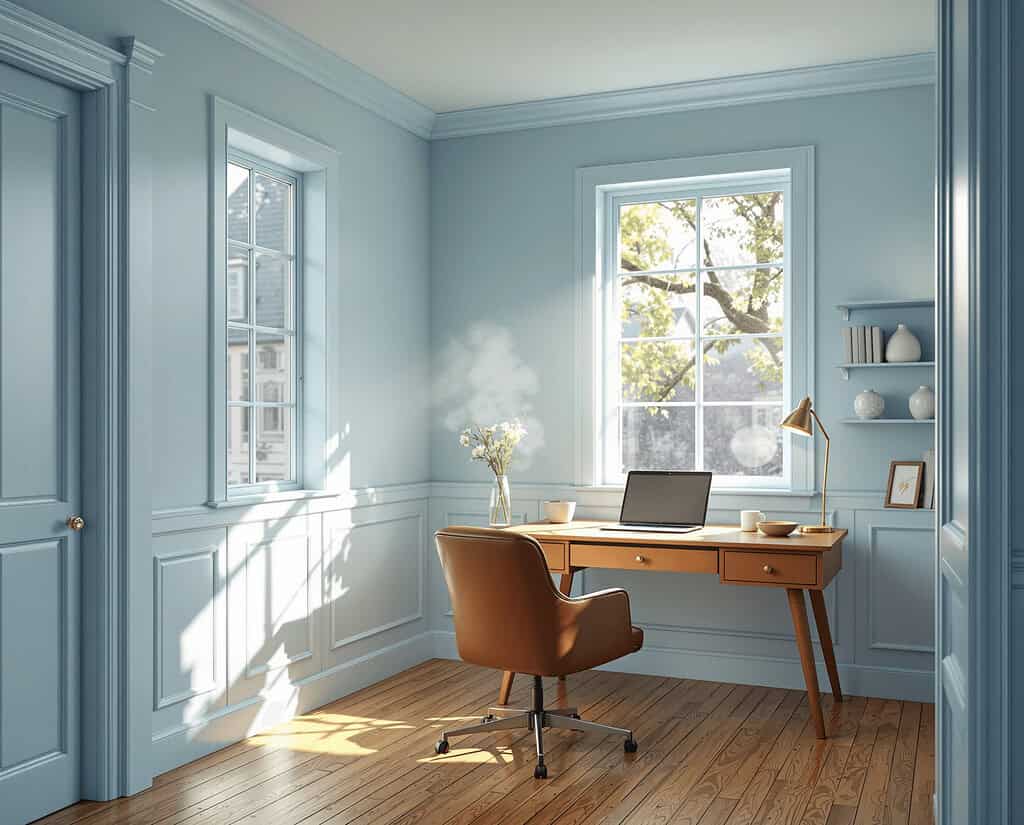
If you are DIYing your renovation, think about the most annoying part of the process and labor intensive. It’s not the rolling; it’s the “cutting in” and the taping.
- Reduced Taping: You don’t need to apply painter’s tape to the top of the baseboard if they are being painted the same color. You can brush right over the joint. Time efficient, get your result faster and its cheaper if you are paying someone to paint.
- No Cutting In at the Ceiling: The most neck-breaking part of painting is getting a perfect straight line where the wall meets the ceiling. With color drenching, that line doesn’t need to be perfect because the color continues up and over.
- Supplies Savings: When you buy one large bucket of paint rather than a gallon of wall color, a quart of trim paint, and a gallon of ceiling white the cost of paint goes down. While the total volume might be similar, the logistics are far simpler and the costs are lower.
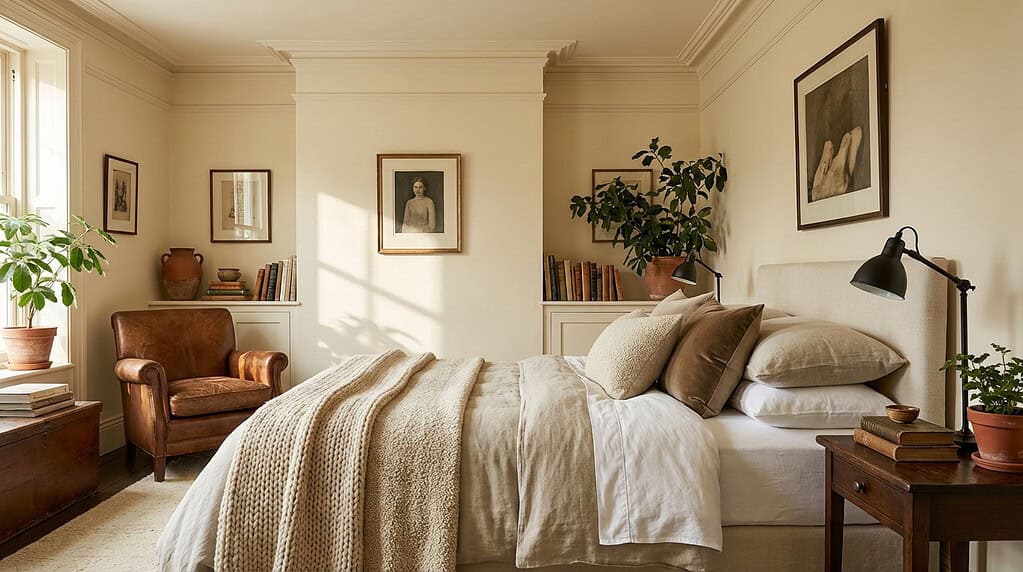
Feel like being Fancy: Use the same color, but switch sheens for a more luxurious high end look.
Use Matte or Eggshell for the walls and ceiling, and Satin or Semi-Gloss for the trim and doors to add a subtle textural contrast. However, if you really want to speed things up, modern “multi-surface” scrubable matte paints are durable enough to go everywhere—even on the baseboards.
The Verdict
Color drenching is that rare design trend that sits perfectly at the intersection of “high style”, “low effort” and “instant benefit”. It solves architectural headaches, makes small rooms feel grand, and saves hours of color selection, taping and painting time.
So next time you pick up a brush, skip the white trim. Be bold, dip the brush, and paint it all.