




White Walls are like the Soldiers of Interior Design.
White walls.
Clean. Stoic.
Classic.
Almost polite.
A touch defensive.
If you’re considering white walls, do you want them to be the cast of a legendary cocktail party? Unfortunately, most white walls make guests look pale and upright, as if waiting for the dentist.
While most people choose white for a “fresh” look, they often end up with “impersonal and aging.” Living with purely white rooms is like living inside a gallery; lovely for the art, but draining on the inhabitants.
If you’ve ever wondered how to decorate white walls without them feeling cold or impersonal, the answer isn’t more white.
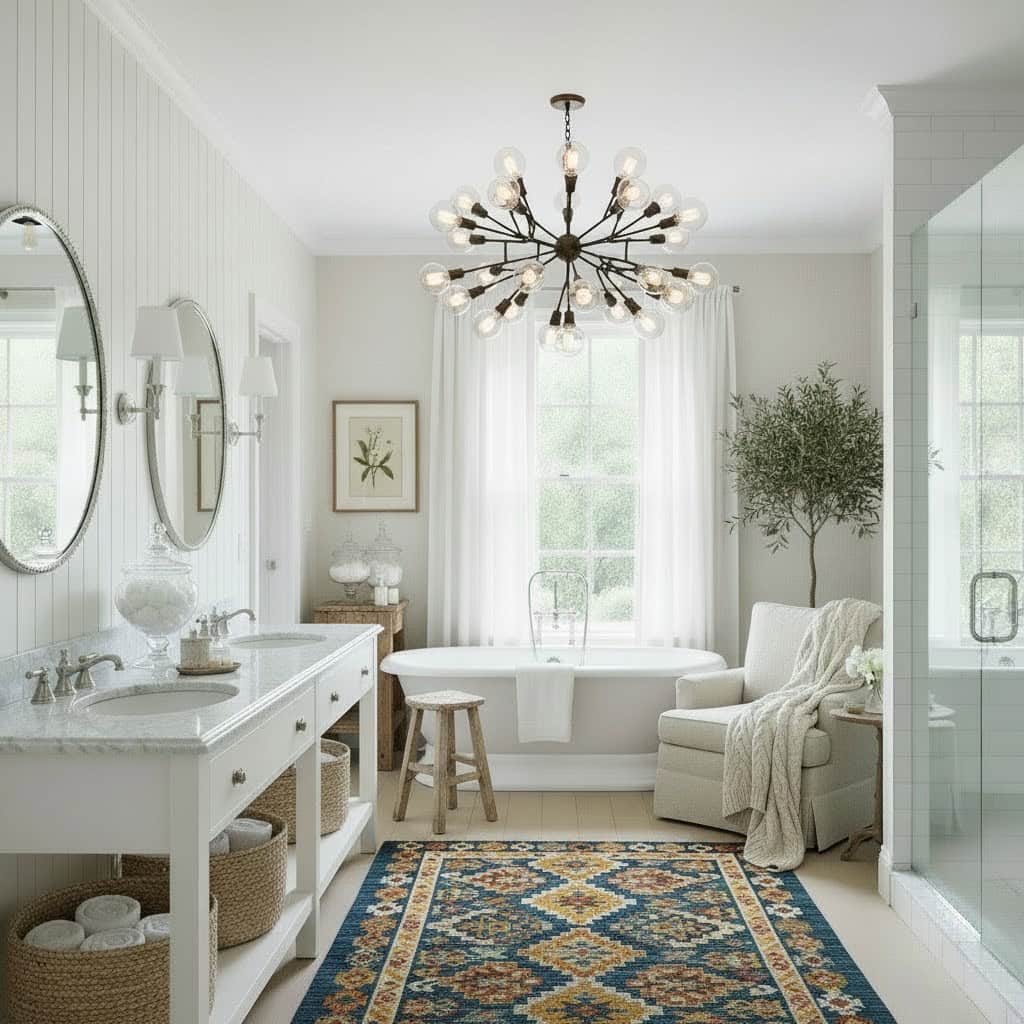
The Great White Wall Personality Test
White is sold to us as easy. Universal. Fail-safe.
In reality, white is the most demanding mistress in the house. It highlights every shadow, amplifies the failings of every light fitting, and exposes an awkward layout like a spotlight on a terrified stand-up comedian.
The Bonus: Get it right and your room feels effortless. Get it wrong and you’re living inside a high-end recovery suite.
So the real question isn’t: Can I live with white walls?
It’s: How can I create drama so the room feels effortless, elegant and timeless?
Large areas of white do not create memorable rooms; however, they are a wonderful stage waiting for someone to say something interesting.
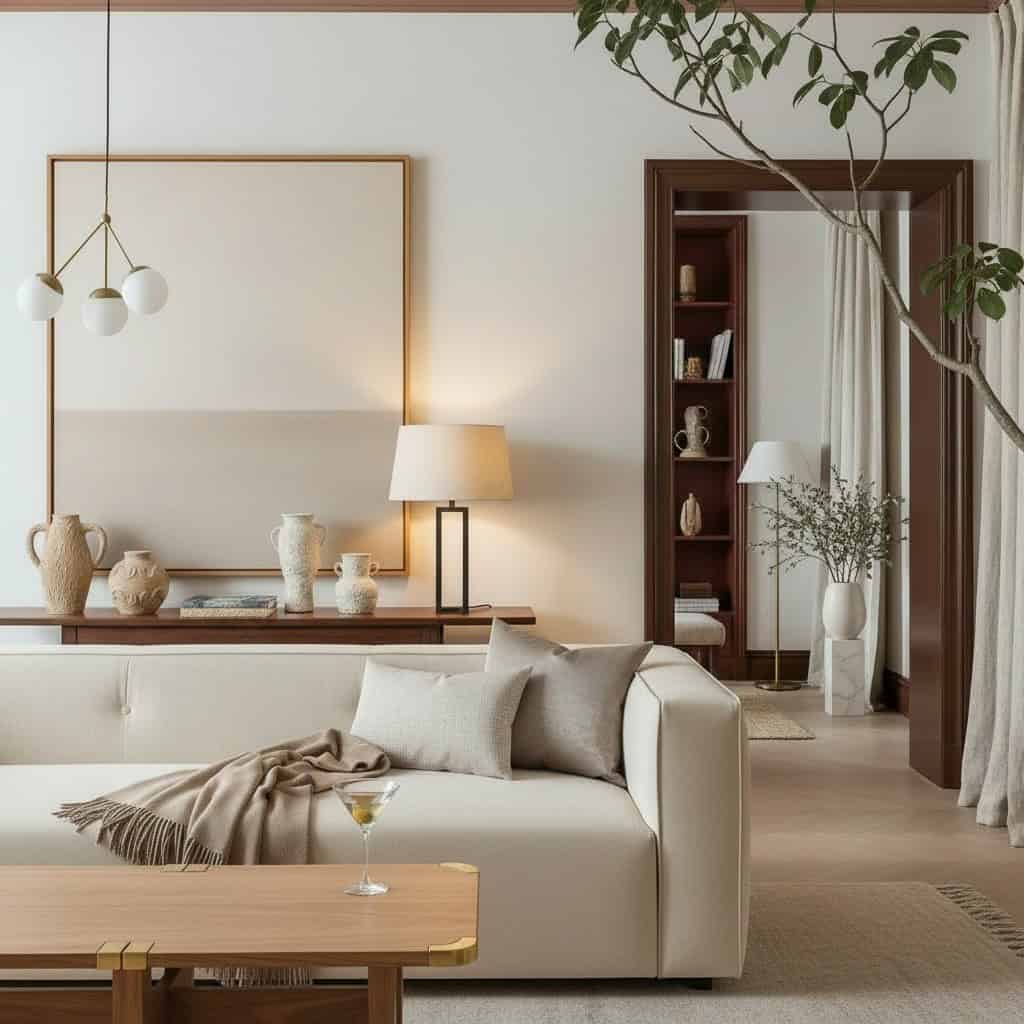
I. The Seduction of the Senses: Wit, Texture, and Light
Learning how to decorate white walls well is less about the paint and more about what you layer around it. Texture, wit and light are some of the tools that make a room vibrate.
1. Pattern as Autobiography
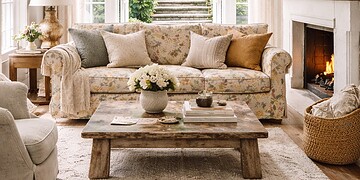
Pattern delivers instant personality. From stripes to chintz, a vintage floral print doesn’t only make a chair more comfortable; it narrates the room. Pattern whispers who lives there. Against white, a great pattern not only provides contrast—it lifts. Its why block print fabrics or Rajasthani floral painted furniture feel magical. The room vibrates with a point of view, which you’re happy to share over a second glass of red.
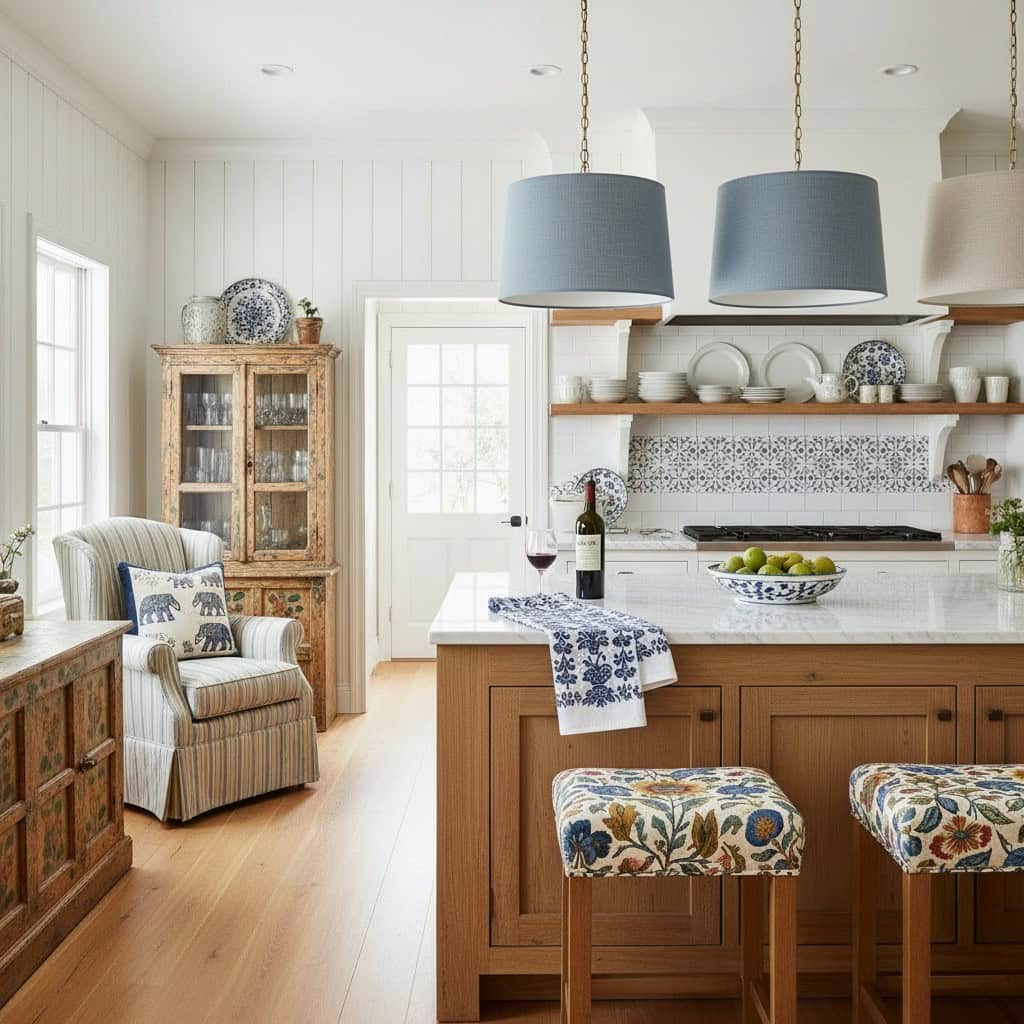
2. Lighting is a Flirtation
Overhead lighting is for supermarkets. In a white room, it is a crime. You want “pools” of light. A lamp tucked away in a nook, a candle placed strategically in front of a mirror to double the flicker, and low-hung pendants to keep the glow at eye level. The best white rooms feel like a warm embrace at 8 PM and a crisp, cold glass of water at 8 AM.
Never underestimate lighting.
3. Texture is the “Secret” Ingredient
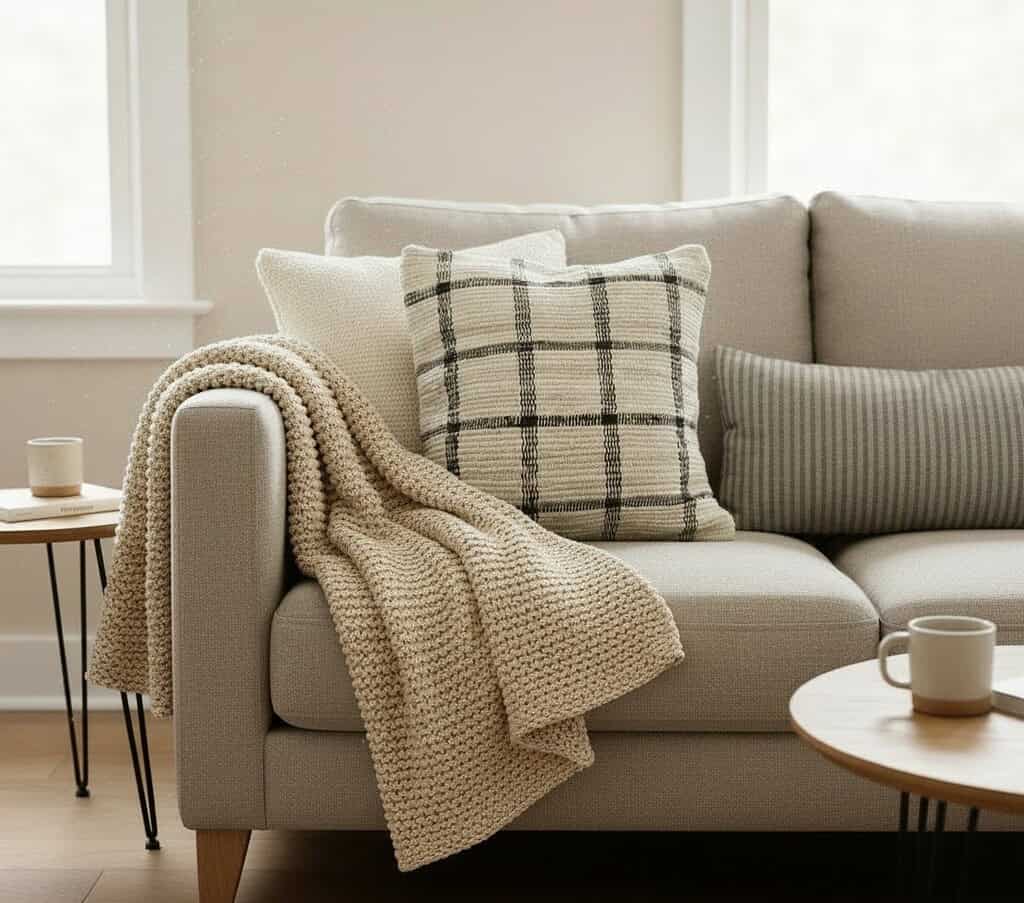
A white wall without texture is simply flat paint. It’s why eggshell paint is expensive; it gives rooms a cozy, almost velvety feel. It’s costly to buy and apply. If you can’t have it on your walls, use these ideas to add it to the room. Think linen curtains with heavy, puddling hems, or woven baskets that melt sharp, empty corners. Follow the designers who have ditched gallery walls for large antique rugs or vintage Kantha quilts.
This is what turns “clean” into “cozy.”
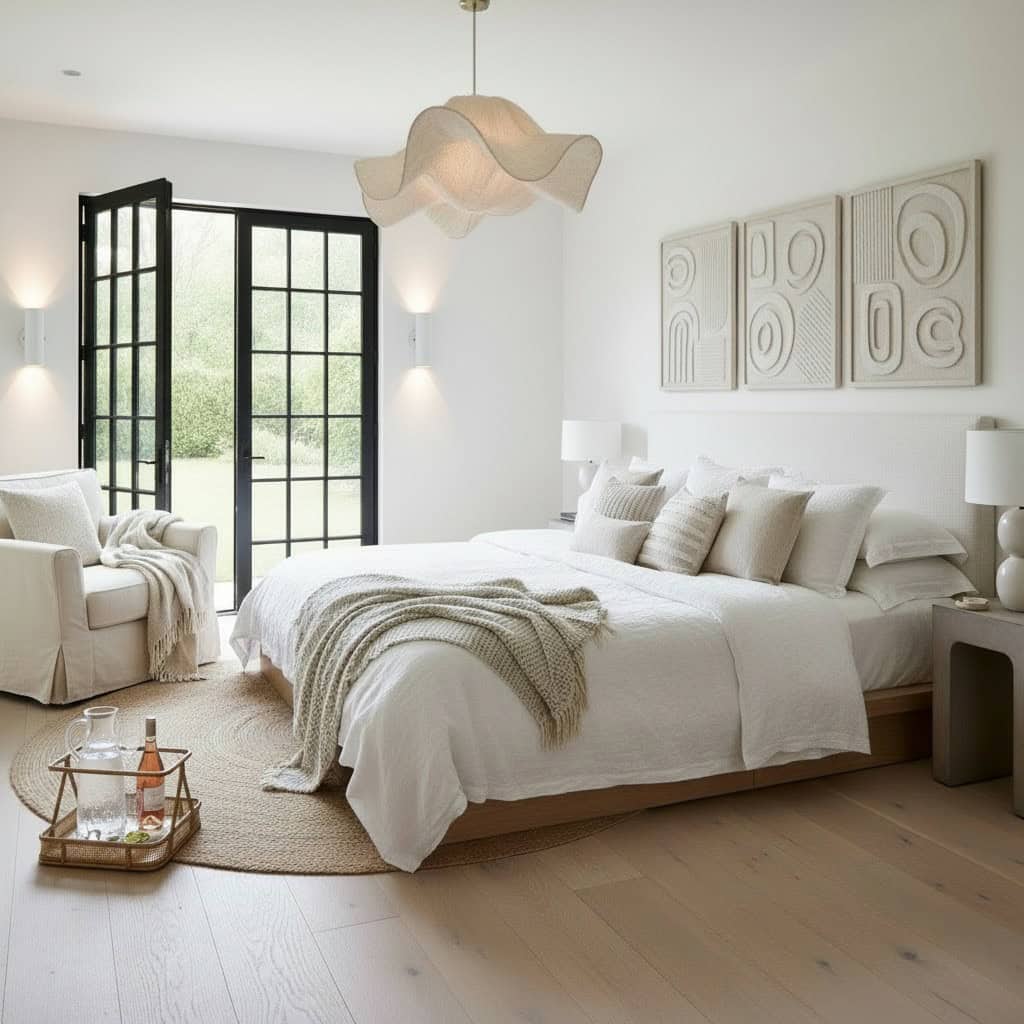
4. Wit Over Whimsy
Think mischievous. An antique with “good bones,” an upholstered chair in shocking neon velvet, a sculptural light fixture that looks like a large piece of jewelry, or a collection of ceramics that catch and soften the light. Choose pieces that look like they have stories.
II. The Element of Surprise: Paint the Places No One Expects
Let your personality peek from the seams of the room.
1. The “Fifth Wall”
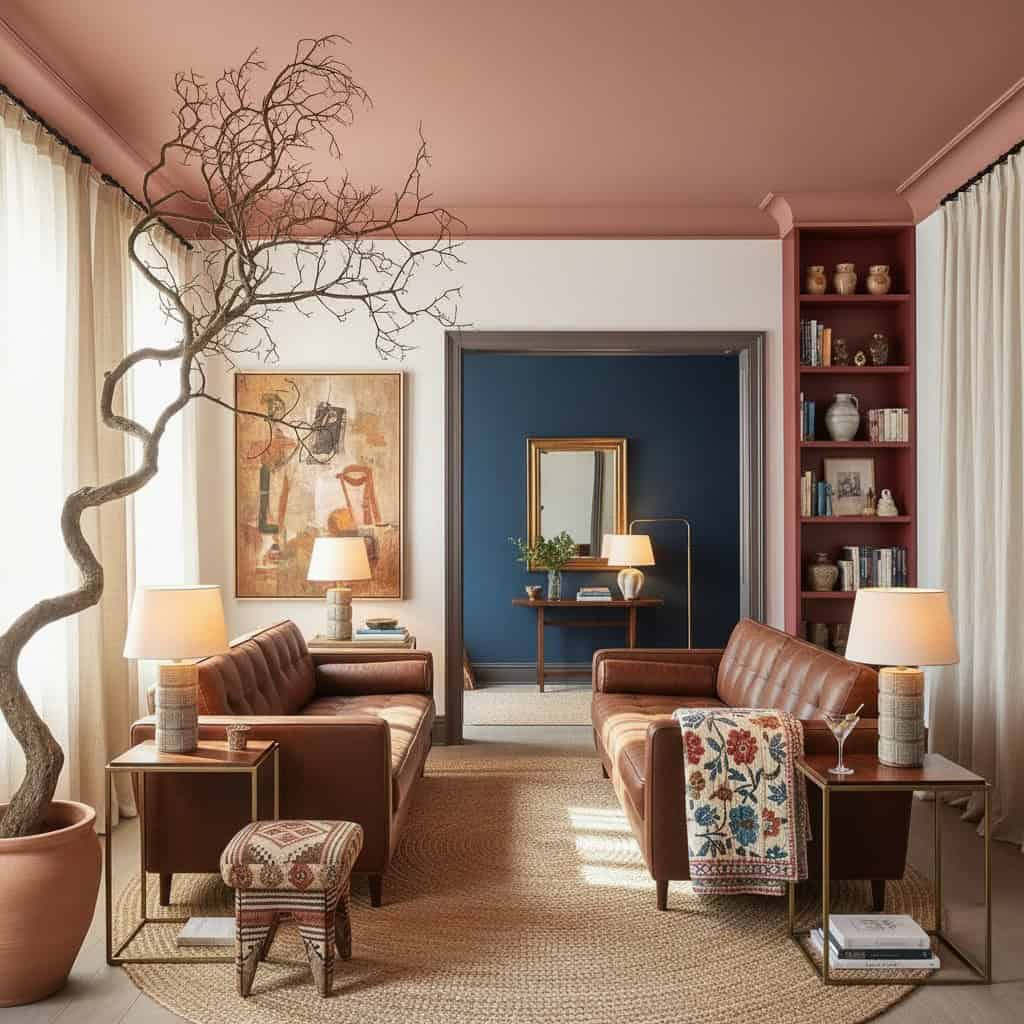
Paint the ceiling a soft light rose, or a shade muddier than your white paint color. It lifts the eye and softens the light.
2. The Jewel Box
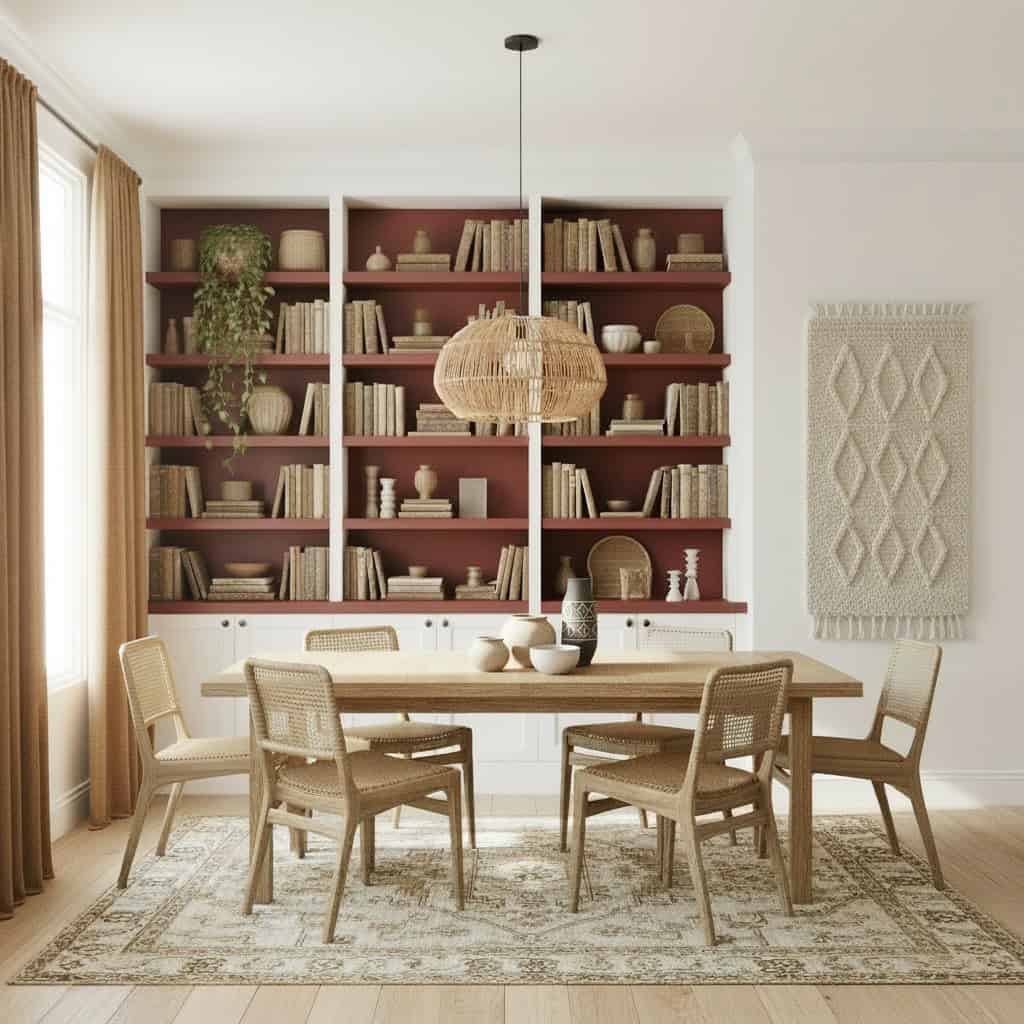
Add a glossy oxblood to the inside of your bookshelves. They reflect light beautifully in an unexpected way. It’s not about color everywhere; it’s about revealing a spark of genius where it’s least expected. Like hiding an Hermès silk scarf; it changes the way you walk, only appearing when you remove your dowdy, sensible wool coat.
3. The Transition
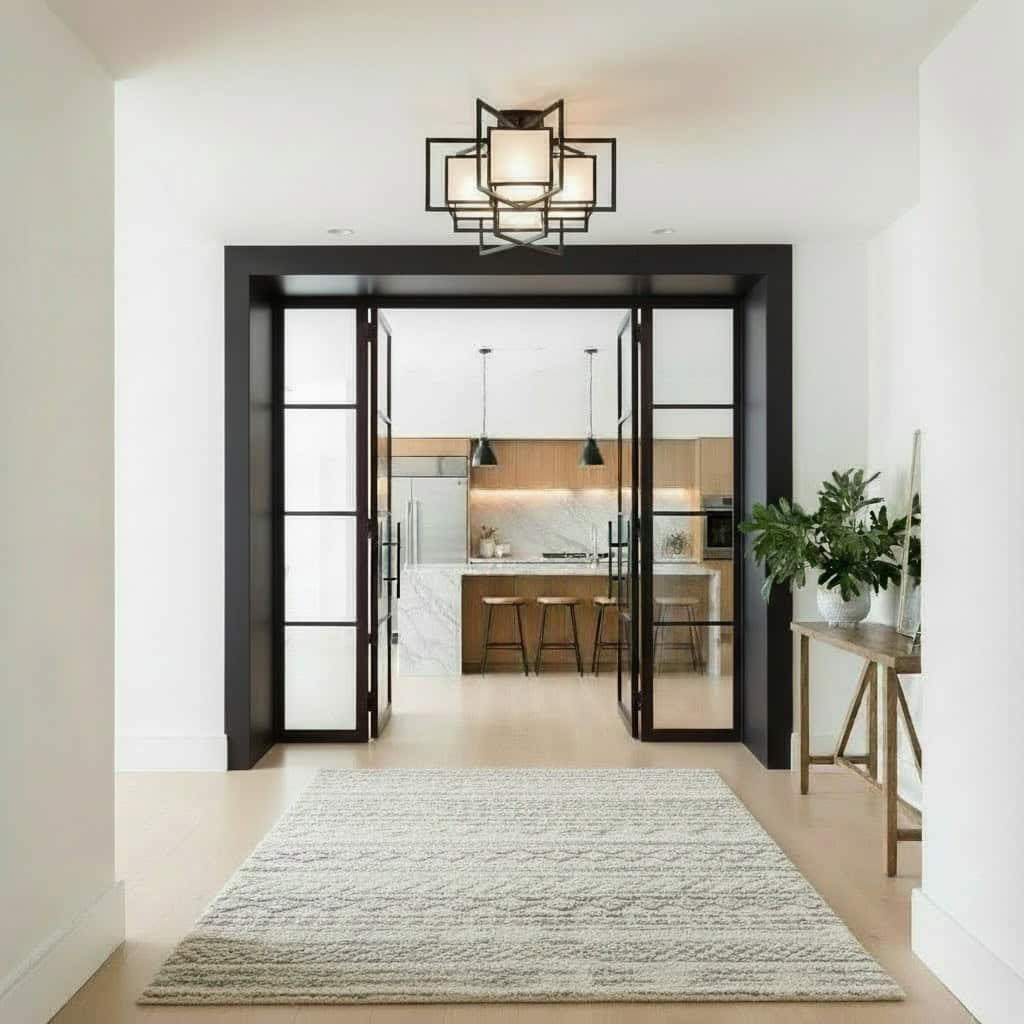
A doorway isn’t just an opening; it’s a frame to another room, another vibe, another side. Paint the door casing in a contrasting lacquer—something dark and delicious like a bitter chocolate or a deep navy. Mark the transition from one room into a new adventure.
III. The Scale of Ambition: One Big Move Beats Ten Small Ones
In a white room, if everything is the same size, the room feels like a flat-pack convention. You need a hierarchy of drama.
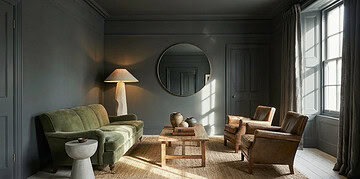
- The “Conversation Island”: Pull your furniture away from walls. In a large white space, you must create a “room within a room.” Anchor a pair of velvet sofas facing each other over an oversized jute rug, then pull in a stray “perch” stool for the guest who likes to hover near the action. Make sure there are small occasional tables with lamps near sofas for beverages, books, and flattering light.
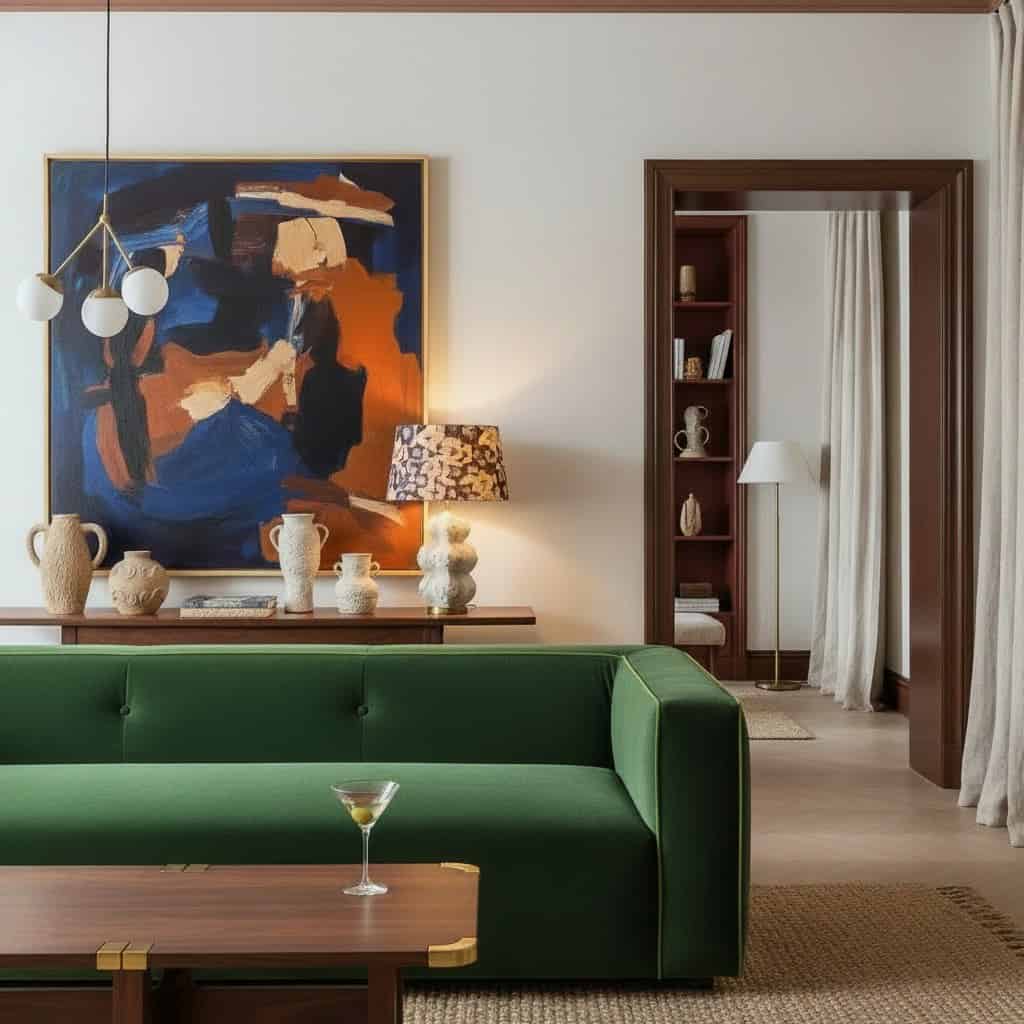
- The Audacious Anchor: Create an intimidating gallery wall with a myriad of contrasting subjects or hang one massive, slightly imposing canvas. Choose something that provides the architectural “weight” that white paint lacks.
- The Botanical Statement: Skip the small potted plants. You want a single, enormous branch—something that looks like it was stolen from an English country estate—reaching toward the ceiling.
Is Your Room Martini-Worthy?
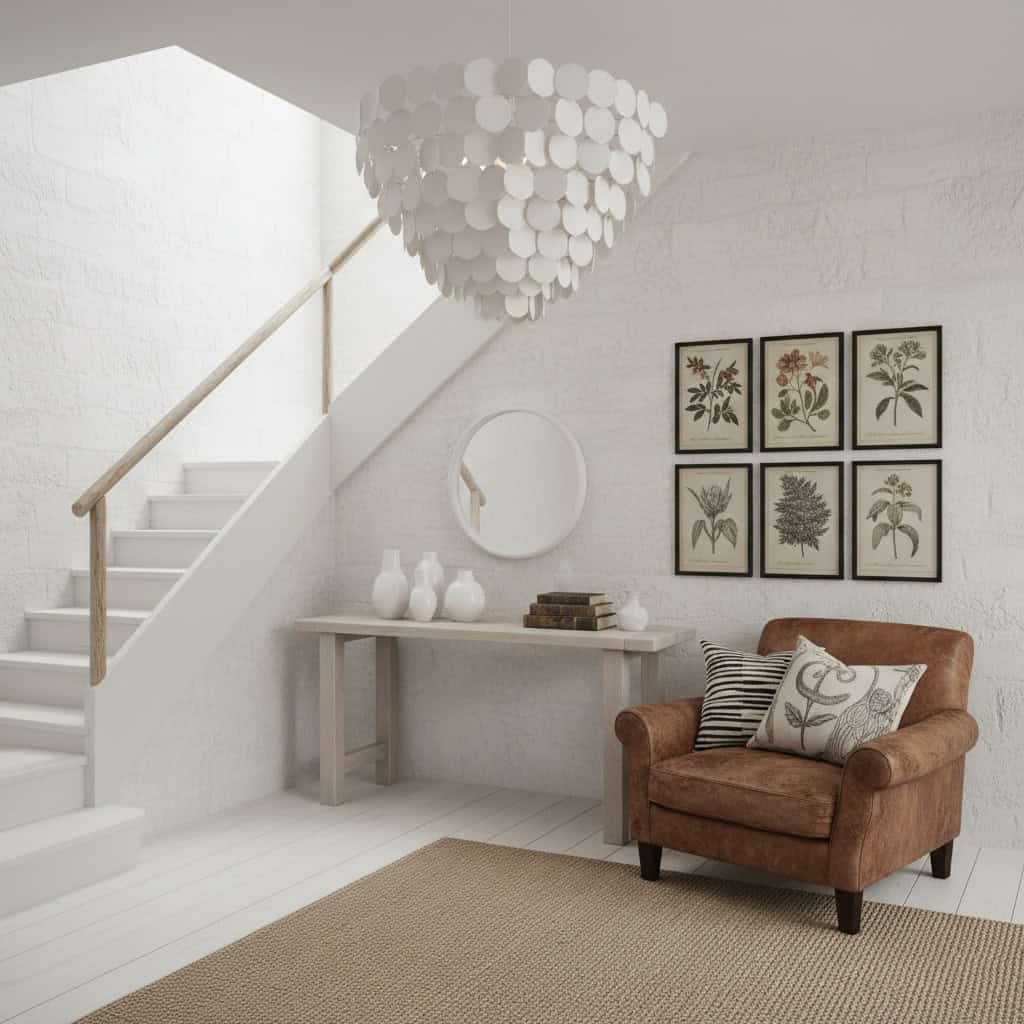
White walls sit right on the edge. They can be calm and timeless, or they can have you removing your shoes and lowering your voice as soon as you approach.
It is never the paint’s fault; it’s all about adding your style and reflection. A room should be lived in, laughed in, and frequently messed up.
Choose an olive, a lemon twist, or herbs. Like salt in a martini: too much ruins the drink, a pinch enhances.
Make your classic white rooms as interesting as your next martini.